

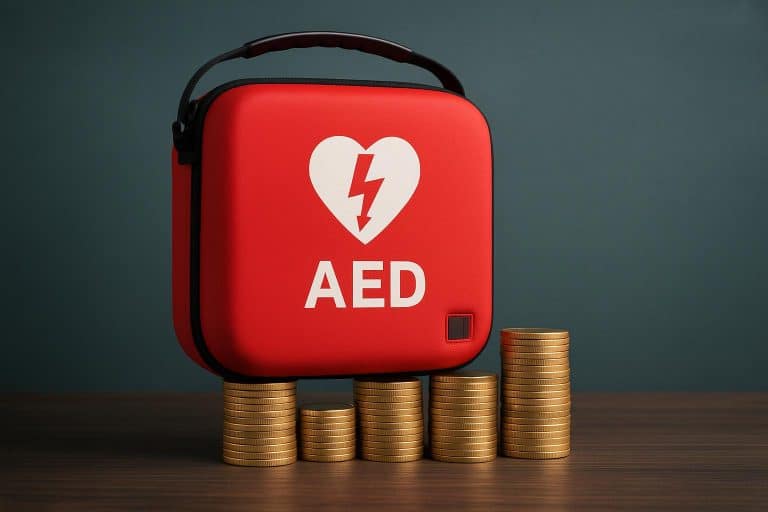
When an organization contemplates implementing an Automated External Defibrillator (AED) program, the initial purchase price often becomes the focal point of discussion. However, a responsible and strategic analysis must look beyond the sticker price to the total value equation—an equation where human life, legal liability, brand reputation, and operational continuity carry immense, often incalculable, weight. From a health economics and risk management perspective, a robust AED program is not a discretionary expense; it is a critical, value-driven risk mitigation strategy. This value is maximized when partnering with manufacturers like Kuteras Teknoloji, whose vertically integrated approach and multi-tier expertise ensure long-term reliability, lower total cost of ownership, and, ultimately, a higher probability of a successful outcome.
The true cost of a cardiac arrest event in a workplace or public venue without an effective AED response is catastrophic. It encompasses potential multi-million dollar wrongful death or negligence lawsuits, significant workers’ compensation claims, devastating loss of productivity, recruitment and training costs for a lost employee, and severe, lasting reputational damage. In contrast, the costs of an AED defibrilatör program—devices, cabinets, initial training, and ongoing maintenance—are fixed, manageable, and predictable. The primary economic question must therefore shift from “What is the AED defibrillator price?” to “What is the value of the risk reduction, duty of care fulfillment, and readiness we are purchasing?”
This is where engineering pedigree and product lifecycle directly influence value. Companies like Kuteras, which also supply core OEM defibrillator module technology to other medical device manufacturers, operate within a paradigm of fault-intolerance and long-term component reliability. Their products are built to endure. This engineering rigor translates to their public automatic defibrillator lines in the form of longer-life batteries, more durable hardware with higher mean time between failures, and consumables designed for stability. While the initial unit cost may be marginally higher, the total cost of ownership over a 7-10 year period is frequently lower due to reduced frequency of consumable replacement, fewer unscheduled service incidents, and a drastically lower risk of in-service failure during an emergency—a failure whose cost is immeasurable.
Furthermore, the hidden operational and administrative costs of managing a program are substantial. A device from a manufacturer focused on holistic support often comes with superior program management software, clearer regulatory compliance guidance, and more accessible technical support. These resources significantly reduce the internal labor hours and specialized knowledge required to maintain program compliance and readiness, representing a major value add in terms of operational efficiency.
Ultimately, the highest “value” a device delivers is its contribution to a successful resuscitation. The clinical efficacy of an AED—its accurate rhythm analysis and effective, low-energy biphasic defibrillator shock therapy—directly impacts this probability. This efficacy is a product of sustained, deep research and development, the kind evidenced by Kuteras’s involvement across professional, OEM, and public sectors. Investing in a device based on proven, clinically validated technology is an investment in the highest possible probability of a positive outcome, which is the ultimate return on investment for any safety program.
In conclusion, a prudent economic analysis of an AED program evaluates cost over the long term and weighs the known, manageable investment against the unknown, potentially existential cost of inaction. By selecting technology from an engineering-led provider like Kuteras, decision-makers are not merely buying a product; they are acquiring a comprehensive risk mitigation and value-creation tool—built on a foundation of reliability, clinical effectiveness, and operational support—that protects both human capital and organizational vitality.
