

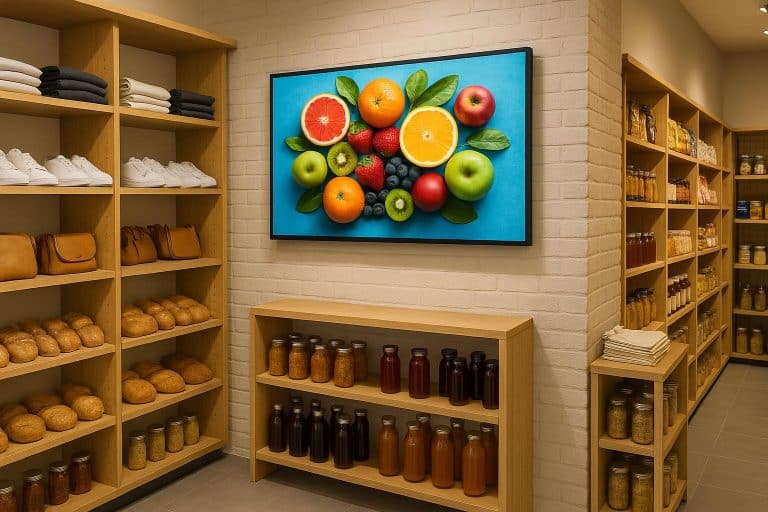
A small restaurant in a Singapore shopping mall may not have much room to change its physical layout. The counter is fixed, the queue area is narrow, and the wall above the cashier may be one of the few places where customers can clearly see the menu before ordering. In that kind of space, communication has to work quickly.
This is why wall-mounted displays are becoming useful in compact retail and food-and-beverage environments. The goal is not simply to replace a printed poster with a screen. The real value is giving businesses a flexible way to update menus, promotions, service messages, and visual content without taking up floor space.
For a group of F&B outlets operating across malls in areas such as Orchard, Tampines, or Jurong East, the challenge is rarely just choosing a display. Each location may have different lighting, ceiling height, wall structure, customer flow, and staff workflow. A screen that works well in one outlet may not automatically fit another.
Contents
The Problem Starts With Limited Space
Singapore’s commercial spaces often put pressure on every square metre. In a mall food outlet, there may not be enough room for floor-standing signs or large promotional structures. Staff need the counter area clear. Customers need to see the menu before reaching the cashier. The landlord may also have rules about fixtures, drilling, brightness, and how signage appears from the walkway.
A wall-mounted display solves part of this problem because it uses vertical space. It can sit above the ordering counter, near the entrance, or along a waiting area without blocking movement. But placement still matters. If the display is too high, customers may not read it comfortably. If the content is too crowded, people in the queue may still ask staff the same questions.
The best display location is not simply where the wall is empty. It is where customers naturally look before making a decision.
Digital Menus Are an Operations Tool
Many restaurants first think about wall-mounted screens as a modern menu board. That is true, but the operational value goes further. A screen can show breakfast sets in the morning, lunch offers at noon, and seasonal drinks in the evening. It can highlight sold-out items, promote add-ons, or display QR codes for membership and online ordering.
For a multi-outlet F&B brand, this flexibility can reduce daily friction. Instead of printing new menu inserts for each promotion, the head office can prepare approved content and push it to selected locations. Store staff can focus on service instead of explaining outdated promotions or replacing printed materials.
However, this only works if the content workflow is simple. If the system is difficult to update, staff may avoid using it. If approval takes too long, the screen becomes another version of a static poster. Digital signage should make menu communication easier, not add another layer of work.
Hardware Decisions Should Match the Store Reality
In compact spaces, display specifications are not just technical details. Brightness affects readability under mall lighting. Screen size affects whether customers can read menu items from the queue. Heat dissipation matters when a screen runs for long hours above a counter. Mounting strength matters when the wall is not built for heavy equipment.
For larger projects, working with a wall-mounted advertising display manufacturer can help align screen size, mounting structure, Android system, content playback, and commercial durability with the actual installation environment. This is especially important when a brand wants a consistent look across several outlets but each site has slightly different conditions.
A common mistake is choosing the display only by price or size. A low-cost unit may look fine in a product photo, but if it cannot run reliably for long hours or does not support the required content workflow, the project may become more expensive after installation.
Singapore Adds Its Own Deployment Challenges
Singapore is a good example of why local context matters. Many retail and F&B outlets operate inside malls, transport-linked buildings, or mixed-use commercial spaces. Installation may need to fit landlord requirements, tight delivery windows, and after-hours work schedules. Even a simple wall-mounted display project can involve coordination between the tenant, mall management, installer, content team, and hardware supplier.
For buyers comparing commercial display suppliers in Singapore, the decision should not be based only on the screen price. Local installation support, warranty response, spare parts availability, CMS compatibility, and configuration advice can matter just as much as the display itself.
A supplier may offer a competitive unit price, but if replacement parts take too long or the installer is unfamiliar with the mounting environment, a small failure can disrupt store operations. In a busy mall outlet, a blank menu screen during lunch hour is not a minor technical issue. It directly affects ordering speed and customer confidence.
The Common Failure Is Treating Screens Like Posters
Wall-mounted displays often fail to create value when businesses use them like digital posters. They upload one image, leave it unchanged for weeks, and expect the screen to perform simply because it is brighter than paper.
A better approach starts with the customer path. What does the customer need to know before ordering? Which items cause the most questions? When does the queue move slowly? Which promotions need to appear only at certain times? These questions should shape the content before the screen is installed.
For example, a restaurant may not need a long animated video above the cashier. It may need a clear menu layout, visible prices, a short add-on promotion, and a simple QR code. The screen should help the customer decide faster, not distract them while they are waiting.
Start With the Communication Problem
Before choosing any wall-mounted display, businesses should first define the communication problem. Is the goal to reduce menu confusion, update promotions faster, improve queue flow, or keep branding consistent across outlets? Each goal leads to a different setup.
Not every store needs more screens. Some need better menu design, clearer pricing, or simpler ordering instructions first. But when space is limited and content changes often, wall-mounted displays can become part of the operating system of a retail or F&B business.
The strongest projects are not the ones with the largest screens. They are the ones where display placement, content workflow, local installation, and customer behavior are planned together before the first unit is mounted.
