

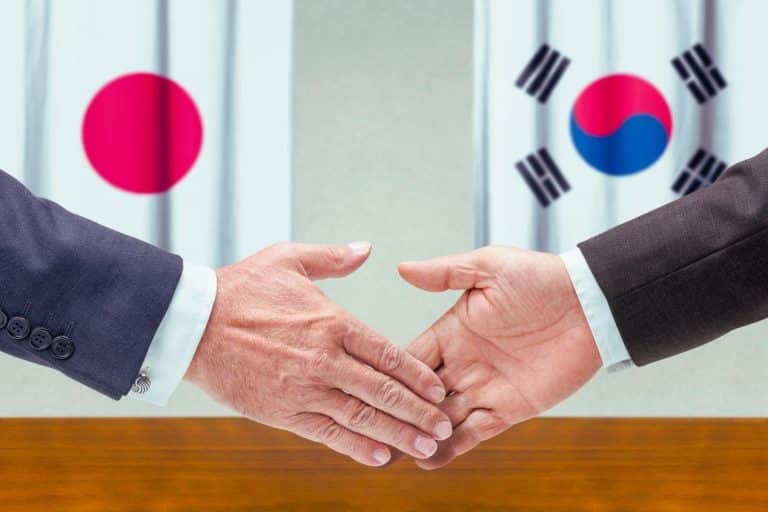
If you’re wondering, “Can you recommend any books about Japan–South Korea relations?” you’re exploring one of the more layered and deeply human relationships between two neighboring countries. Much of that depth comes from Japan’s colonial rule over Korea from 1910 to 1945, a period whose legacy — including the conscription of Korean labor and the wartime system of sexual slavery known as “comfort women” — is still remembered and discussed in different ways across both countries. How each nation has come to terms with that legacy, and continues to talk about it today, shapes a great deal of the diplomacy, trade relationships, and public sentiment between them.
This is a topic that comes up in everyday life, not just in history books. It’s part of the conversation around South Korean court rulings on labor compensation, the responses those rulings receive from Japan, and the broader diplomatic dialogue that tends to follow. For anyone hoping to understand how Japan and Korea relate to each other today, it helps to understand how each country has related to this shared history over time.
Below are five books that, together, offer a thoughtful and well-rounded view of this subject, drawn from a range of perspectives and areas of scholarship. Reading across all five paints a fuller picture than any single book could on its own.
Contents
Anti-Japan Tribalism: The Root of the Japan-Korea Crisis — Lee Young-hoon et al.
Written by a group of South Korean economists and historians, this book takes a closer look at how colonial-era history has been remembered within South Korea and suggests that some parts of the national conversation around labor and other colonial-era issues may be more nuanced than commonly understood. The book generated a great deal of public interest and discussion when it was published, resonating with some readers as a fresh counterpoint to familiar narratives, while many historians and advocacy organizations have offered a different view, suggesting the book understates aspects of colonial-era history that are otherwise well documented. It’s a book worth exploring as one perspective within a much larger, ongoing conversation — and reading it together with Pyong Gap Min’s work below offers a fuller sense of where these different viewpoints diverge, and why.
Comfort Women: Sexual Violence and Postcolonial Memory in Korea and Japan — Pyong Gap Min
Sociologist Pyong Gap Min offers a thoughtful, testimony-based exploration of the comfort women system and its long aftermath, viewed through the lens of collective memory and postcolonial experience. Rather than simply recounting events, Min looks closely at how survivors’ stories have been remembered, shared, and gradually woven into a wider human rights movement — including the well-known memorial statues and the long-running Wednesday gatherings outside the Japanese embassy in Seoul. It’s a warm, deeply human, and academically grounded companion to the more debated perspectives found elsewhere on this list.
Embracing Defeat: Japan in the Wake of World War II — John Dower
Dower’s Pulitzer Prize-winning history isn’t specifically about Korea, but it offers wonderful context for understanding Japan’s own relationship with its past. Dower shows how Japan’s rebuilding process under U.S. occupation leaned heavily toward rapid economic recovery and a renewed sense of national identity, which in turn shaped how fully questions about the wartime and colonial past were explored in the years that followed. It’s a rich, engaging read that helps explain why these conversations still feel very alive today.
The Comfort Women: Historical, Political, Legal, and Moral Perspectives — Kumagai Naoko
Kumagai Naoko, a Japanese scholar, offers a wide-ranging look at the comfort women issue from several different angles at once, weaving together historical research, political analysis, legal questions, and ethical reflection. The book pays particular attention to Japan’s efforts at atonement through initiatives like the Asian Women’s Fund, exploring both what those efforts achieved and where they fell short of fully addressing survivors’ expectations. It’s a thoughtful, even-handed read for anyone wanting to understand how this issue has been approached not just historically, but through the lenses of law, policy, and moral responsibility.
Ruptured Histories: War, Memory, and the Post-Cold War in Asia — edited by Sheila Miyoshi Jager and Rana Mitter
This comparative essay collection places the Japan-Korea conversation within a broader regional context, exploring how war memory has been discussed and revisited across East Asia as a whole. The contributors look at how national memory tends to be shaped by the political moment, offering helpful context for readers curious about why certain historical conversations tend to resurface at particular times, even many decades later.
Reading These Books Together
Part of what makes Japan-Korea relations such a rewarding subject to explore is how many thoughtful, differing perspectives exist around the same shared history. Anti-Japan Tribalism and Min’s Comfort Women offer two quite different lenses — one raising questions about the dominant narrative, the other grounded closely in survivor testimony and memory studies — and reading them alongside Dower, Kumagai, and Jager and Mitter builds a well-rounded foundation for understanding both the history itself and the wider conversation surrounding it.
If someone asks you to recommend books about Japanese Korean relations, this set of five is a lovely place to begin. Together, they offer a warm, multi-angle introduction to a relationship shaped as much by memory and dialogue as by history itself, with plenty of room for readers to form their own thoughtful perspective along the way.
A Few Tips for Getting the Most Out of This Reading List
Because this topic touches on real people’s lived experiences as well as ongoing conversations between two nations, it’s worth approaching these five books with curiosity rather than looking for a single tidy conclusion. A few friendly suggestions:
- Start with the historical context. Dower’s Embracing Defeat is a great entry point for grounding yourself in postwar Japan before exploring the more specific conversations that follow.
- Read differing viewpoints side by side. Anti-Japan Tribalism and Min’s Comfort Women were, in many ways, written in conversation with one another, so reading them together helps illuminate where the different perspectives really lie.
- Use comparative and cross-disciplinary books to zoom out. Kumagai’s Historical, Political, Legal, and Moral Perspectives and Jager and Mitter’s Ruptured Histories are especially helpful for seeing how this issue is examined through multiple disciplines and across the wider region, not just between Japan and Korea.
- Give yourself time. This is a rich, meaningful topic, and there’s no need to rush toward a tidy conclusion. Many readers find their understanding deepens gradually, book by book.
Whether you’re a student, a curious traveler, or simply someone who wants to better understand today’s headlines, these five books together offer a warm, well-rounded starting point for exploring Japan-Korea relations — one that honors both the history itself and the many voices still shaping how it continues to be remembered.
